
Here's How You Can Avoid This Common & Costly Color Illusion
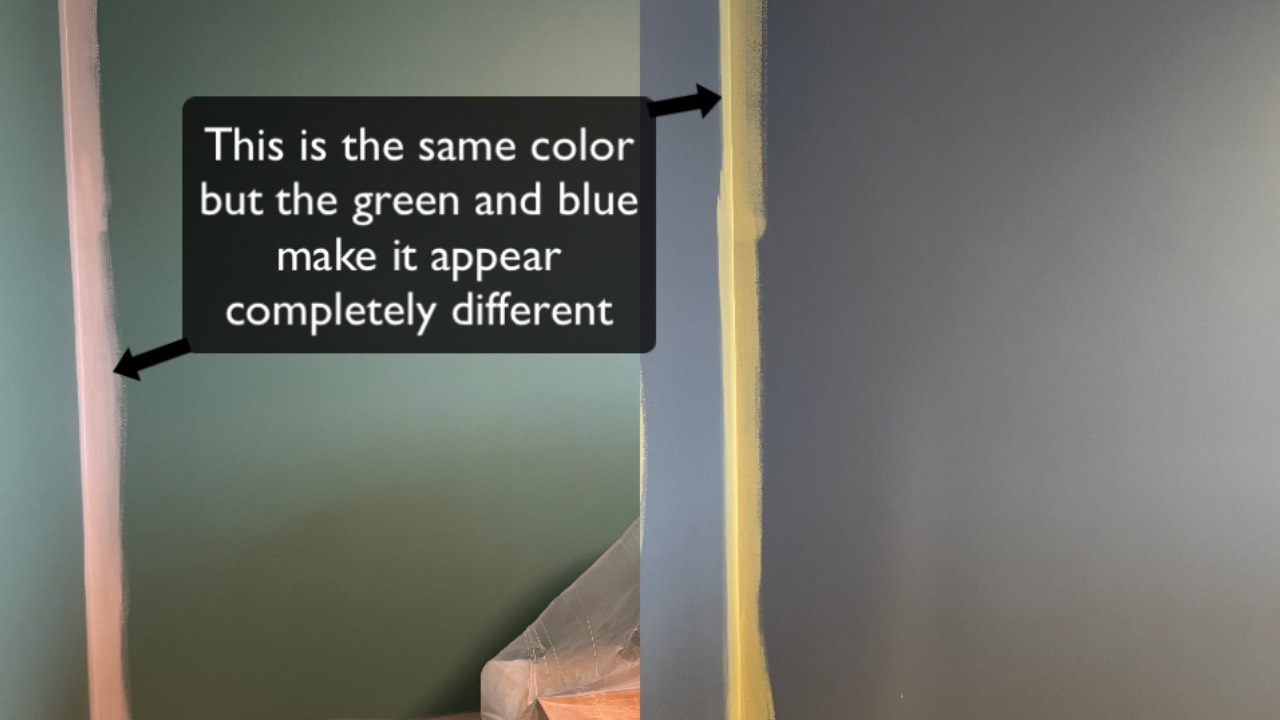
Even experienced painters can be surprised by how a freshly applied color appears on a wall. A color that looked a certain way on a sample can suddenly look “off” once you begin applying it to the wall. This isn’t a mistake—it’s a color illusion, and it’s one of the main reasons clients call mid-project thinking something has gone wrong.
If you’ve ever had a client panic halfway through a job because the color “doesn’t look right,” understanding this illusion—and knowing how to prevent it—will save you time, frustration, and unnecessary coats.
What is the Color Illusion?
The color illusion happens when fresh new paint is placed next to sections of the wall that are still the old color—not because the new paint isn’t covering the old fully, but because your eye compares the two colors side by side and that tricks the brain into seeing something completely different.
-
Even a neutral gray or beige can appear dramatically different when it’s only partially rolled or cut in next to the old color.
-
This often happens during the first coat if you cut in first and haven’t rolled the wall yet, or if small sections are rolled while the rest remains the old color.
-
Clients see this and assume the color is wrong, even though it will look correct once the wall is fully rolled.
The Fix: Roll the First Coat Before Cutting In
Our approach at Expressions Painting is simple but effective:
Roll the entire wall before cutting in on the first coat.
This prevents the new color from sitting next to the old color and eliminates the illusion entirely.
This adjustment:
-
Prevents mid-project panic calls from clients
-
Gives a true representation of the new color from the first coat onward
See the Illusion in Action
The easiest way to understand this effect is visually. Watch our short video below to see examples from real projects and how rolling the first coat before cutting in solves the problem.
For an even deeper dive—including other common color illusions and how to manage them professionally—check out our COLOR 101 course.

Want FREE Tips & Tricks sent to your inbox PLUS a FREE Estimating Guide?
Author

REMI BOUDREAU
Licensed Painter & Color Consultant
Rémi Boudreau is a Red Seal Painter & Decorator and winner of multiple awards in his field. He is a strong believer in the Power of Color and has been on a mission to improve the painting industry for nearly 20 years. His weekly educational videos are watched by more than 4000 people every single day. Remi is the owner of Expressions Painting and founder of Expressions Painting University - an online school for PAINTERS, CONTRACTORS & CONSULTANTS with students in over 20 different countries. Remi lives in Moncton, NB (Canada) with his wife and three kids.